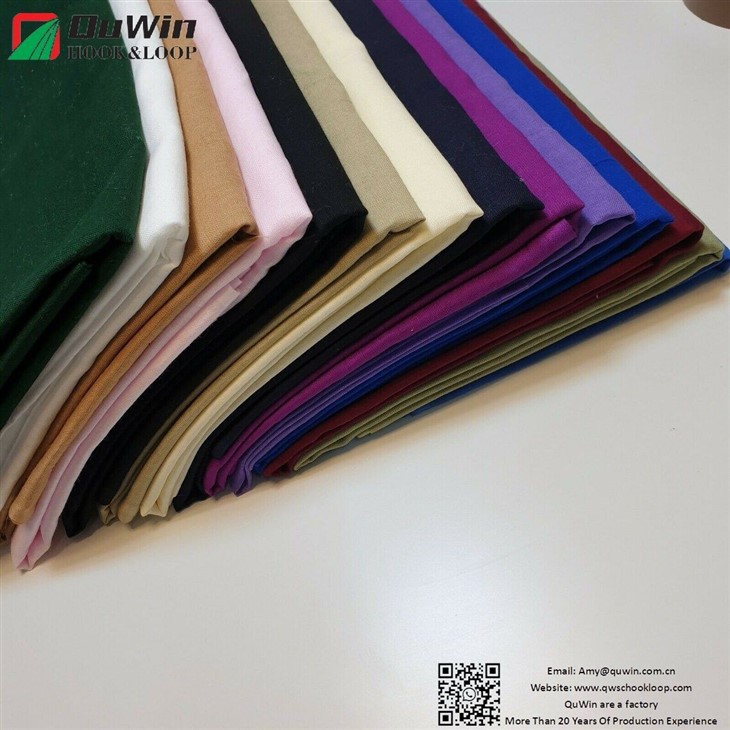
Your Professional Lining Manufacturer in China!


Dongguan Quwen Co., Ltd. has more than 20 years of production experience in the textile industry. Our company has more than a dozen complete production lines with a daily output of more than 1 million meters. We provide customized hook and loop fasteners with strap sizes ranging from 10MM to 180MM. Our factory's products are exported to more than 60 countries and regions. In addition, we have obtained hundreds of tests and certifications such as ISO9001, OEKO-TEX 100, ROHS, REACH, etc., and have been widely praised by the market.


Why Choose Us
 

Broad Market
At present, we have been working with more than 3000 customers from all around the world, and some big companies. Our products are exported to Asia, Europe, North America, South America, Africa and other countries and regions from all over the world.


Competitive Price
Because it is factory direct sales, we can provide the highest quality products and the best prices.


Quality Ensure
Our factory has obtained ISO9001 certification. For more than 20 years, we have been insisting on making high-quality products in medical, baby, automobile, aviation and other fields. We pay attention to quality inspection in every link to ensure that the products we send out have no quality problems.


After-Sales Service
As long as the products are purchased from our company, we will provide the most complete after-sales service, and any product quality problems will be reviewed, accepted and returned in a timely manner.


First 1234567 Last

Welcome to the QuWin official website's product category, "Lining." Within this category, you'll discover a comprehensive array of lining materials, each thoughtfully chosen to enhance the comfort, durability, and overall quality of your sewing and tailoring projects. Lining plays a crucial role in providing structure and a polished finish to garments and accessories, making it an essential component in the world of sewing and fashion.

At QuWin, we take great pride in offering a diverse selection of lining materials in various colors, textures, and compositions, ensuring that you find the perfect option for your unique projects. Whether you're a seasoned tailor, a fashion designer, or a DIY enthusiast, you'll appreciate the quality and versatility of our lining materials.

Explore our Lining category to discover the ideal lining materials that will elevate your creations, making them not only stylish but also comfortable and long-lasting. With QuWin's dedication to quality and performance, you can trust that our lining materials will serve as the essential foundation for your sewing and tailoring endeavors, ensuring that your finished pieces are both beautifully structured and impeccably finished.


Introduction of Lining


In sewing and tailoring, a lining is an inner layer of fabric, fur, or other material inserted into clothing, hats, luggage, curtains, handbags and similar items. Linings provide a neat inside finish and conceal interfacing, padding, the raw edges of seams, and other construction details. A lining reduces the wearing strain on clothing, extending the useful life of the lined garment. A smooth lining allows a coat or jacket to slip on over other clothing easily, and linings add warmth to cold-weather wear. Linings are typically made of solid colors to coordinate with the garment fabric, but patterned and contrasting-colored linings are also used. In tailoring, home sewing, and ready-to-wear clothing construction, linings are usually completed as a unit before being fitted into the garment shell. In haute couture, the sleeves and body are usually lined separately before assembly.


Types of Linings
 

Stretch Linings
These are specifically designed to be used as linings for stretch fabrics as the lining will move and stretch with the outer fabric as the wearer moves and prevents riding up of dresses. Stretch linings are available as stretch taffeta, Lycra, poplin and satin to suit your main fabric.

Bemberg Cupro Linings
Bemberg Cupro is a high quality breathable lightweight and durable lining made from natural cotton fibers. It is ideal for lining jackets and skirts made from wool or linen, where a polyester lining would negate the breathable qualities of natural fibers. It has a luxury silky finish, is anti-static and anti-cling and wicks away any sweat or moisture from the wearer's skin.

Taffeta Lining
This is a fine, crisp plain-woven lining fabric that has a lustrous surface and is associated with luxury and high-end garments. It is the perfect lining for evening wear, bridal dresses and corsetry applications as it holds its shape well.

Satin Linings
Satin linings are available in various qualities and these typically have a glossy surface and dull back and are heavier. They drape well and are commonly used for lining jackets, bridal and evening gowns, coats and waistcoats. Many costumiers use satin linings due to the finish and weight.

Twill Linings
Heavy viscose twill is a substantial weight lining and is mainly used as a coat lining. It will give your garment a couture feel as this lining is often used by bespoke tailors and fashion designers.


Reasons For Using The Best Lining Fabrics For Your Clothes


Enhanced Comfort
High-quality lining fabrics ensure that your clothing remains comfortable to wear. It prevents itching or discomfort that may arise from direct contact with the outer fabric. Lining fabrics like silk, cotton, and Bemberg are known for their soft, smooth, and breathable properties, enhancing the overall comfort of your garments.

Improved Durability
Durability is a critical aspect of any clothing piece. The right lining fabric can significantly extend the lifespan of your clothing. It provides extra protection to the outer fabric, reducing wear and tear. Durability is especially vital in tailored clothing like blazers, where a stable lining can help maintain the garment's shape over time.

Shape Retention
Lining fabrics help maintain the shape and structure of your clothing. They prevent sagging or stretching, ensuring that your garments look as good as new even after repeated wear. This is particularly important in items like suits, dresses, and jackets, where a well-maintained shape is essential.

Moisture Management
In outerwear, such as jackets and coats, moisture management is crucial. Lining fabrics can help wick away moisture and keep you dry, making them ideal for outdoor or active wear. Fabrics are designed for insulation and moisture resistance, making them valuable additions to winter clothing.

Opacity
For clothing made from translucent or light-colored outer fabrics, lining fabrics play a pivotal role in maintaining opacity. Choosing the right lining color that closely matches the outer fabric ensures that your clothing remains discreet and avoids unwanted see-through effects.

Tailoring and Fit
Quality lining fabrics enhance the overall fit and tailoring of your garments. They allow for smoother and easier movement, making fitted clothing more comfortable to wear. The stretch and flexibility of certain lining fabrics contribute to a better fit, ensuring that your clothing moves with you.

Professional Finish
Finally, using the best lining fabrics elevates the professional finish of your clothing. The quality of your lining is often a reflection of the overall quality and attention to detail of your garment. It's the finishing touch that sets apart a well-constructed piece from a mediocre one.

Ensures Easy Layering
For jackets and coats, a well-chosen lining fabric enables these outerwear pieces to effortlessly slide over other layers of clothing, providing a seamless and hassle-free dressing experience.


Key Factors to Consider When Choosing Lining
Cambric Lining
Poly Cotton Lining Fabric
Quilting Cotton Lining
Sateen Lining

Fabric Type
Lining fabrics come in various materials, each with its unique properties. Some common options include silk, satin, cotton, polyester, acetate, and rayon. The choice depends on the type of garment, personal preferences, and the desired outcome. For example, silk and satin linings add a touch of luxury, while cotton linings are breathable and comfortable.

Weight
Consider the weight of the lining fabric in relation to the outer fabric. A lightweight lining is ideal for delicate, sheer, or lightweight outer fabrics. Heavier linings are suitable for structured or winter garments.

Color
The color of the lining is crucial, especially if the outer fabric is sheer or light in color. A mismatched lining can show through and alter the appearance of the garment. Opt for a lining color that closely matches the outer fabric or complements it.

Texture
Lining fabrics come in various textures, from smooth and slippery to textured or ribbed. The texture can affect how the clothing feels on your skin and how it interacts with the outer fabric. Choose a texture that enhances the comfort and functionality of the garment.

Breathability
Consider the breathability of the lining fabric, especially for clothing that will be worn in warm weather. Breathable linings like cotton allow air circulation, reducing the risk of discomfort due to heat and perspiration.

Moisture-Wicking Properties
If you're selecting lining fabric for activewear or undergarments, prioritize materials with moisture-wicking properties. These fabrics pull sweat away from the skin, keeping you dry during physical activities.

Cost
Lining fabrics come in a range of price points. While quality is essential, consider your budget when choosing the best lining fabric. Keep in mind that an investment in high-quality lining can extend the life of your garments.


10 Top Tips For Sewing With Lining Fabrics


Choose the Right Lining Fabric
Select a lining fabric that complements your main fabric in terms of weight, drape, and color. Common lining fabrics include silk, polyester, rayon, and acetate. Make sure the lining fabric is suitable for the intended use of the garment.

Pre-Wash or Pre-Treat the Lining Fabric
It's a good practice to pre-wash or pre-treat the lining fabric before sewing to account for any potential shrinkage.

Use a Sharp Needle
When sewing with lining fabric, it's important to use a sharp needle. A fresh needle will ensure clean and precise stitching without damaging the delicate fabric.

Pin and Cut with Precision
Pin the lining fabric carefully to the pattern pieces and cut accurately. Since lining fabric is usually slippery, using pattern weights or a fabric stabilizer can help keep everything in place during cutting. A rotary cutter can be particularly helpful for cutting linings.

Reduce Fraying
Lining fabrics tend to fray easily. To minimize fraying, consider using pinking shears, applying a fabric fray inhibitor, or using a overlocked to finish the raw edges.

Use a Lightweight Thread
Opt for a lightweight thread when sewing with lining fabric. A fine polyester or silk thread will help prevent bulkiness and ensure smooth seams.

Take Extra Care with Pressing
Test the iron temperature on a scrap piece of lining fabric before pressing. Some lining fabrics are heat-sensitive and can melt or scorch. Use a pressing cloth or press from the wrong side to avoid any damage.

Trim Seam Allowances
To reduce bulk, trim the seam allowances in the lining fabric. However, be cautious not to cut too close to the stitching, as it may weaken the seams.

Understitching for a Neat Finish
Understitching is a technique where the lining is stitched close to the seam allowances, helping the lining fabric to stay in place and not peek out. It also gives a clean and professional finish.

Test and Adjust
Before sewing the actual garment, it's always a good idea to make a test garment or sew a small sample to ensure the fit and construction techniques work well with the lining fabric.


4-Step Ordering Process
 

Submit A Quote Request

The process for lining development begins with a quote request. You can submit a quote request telling us what you're looking to have produced and we can then provide you with a quote on how much your custom product order would cost.

Cambric Lining
Poly Cotton Lining Fabric

Send Over Your Design

If the quote looks good to you, the next step will be sending us the custom design you want added to your custom lining. Ideally, your design will be in an Adobe Illustrator (.ai) or encapsulated postscript (.eps) format, but we can help you convert the file for free if it isn't. If you don't have a design created, we can help you create a design at no cost!

Review The Proof

Once we have your custom design, we'll then create a proof for you to review so that you can see what your design will look like on your new custom lining. If you approve of the proof, we'll then send you an invoice before beginning production.

Quilting Cotton Lining
Sateen Lining

Production & Delivery

Once your invoice is paid, we'll begin production. We'll deliver your custom lining straight to you after production. If you don't have the storage for your whole order, we can store a portion of your order for you until you need it.


Our Factory


The production base of Dongguan Quwen Co., Ltd. is located in Dongguan City, Guangdong Province, China, covering an area of more than 5,000 square meters. Currently, our factory has more than 100 production equipment, forming more than a dozen complete production lines, with strong production capacity.


productcate-1-1


productcate-1217-656


Our Certification


Our factory has obtained a number of international certifications, and our products have passed hundreds of testing certifications such as OEKO-TEX 100, ROHS, REACH, etc., and have been widely praised by the market.


productcate-1-1


productcate-1-1


Ultimate FAQ Guide to Lining


Q: What should you consider when choosing lining fabric?

A: Some lining fabrics are backed with or come with interlining substances: a metallic reflective finish, backed with wool, quilted, or napped-backed lining fabrics, etc. Bulk often becomes a serious consideration. Interlinings must be compatible with all other fabrics in the garment in terms of care.

Q: How to Make up and Testing of Linings?

A: Lining fabrics normally unravel easily and should be secured or stitched with a four-thread safety stitch machine, though the thread consumption is higher. Regardless of whether lining materials are pressed or not before setting of seams, all vertical seam pieces should be pressed to one side. The shrinkage of lining fabric and base fabric with respect to length as well as width of fabric should be matched with each other. The wash-n-wear garment should be washed in a washing machine with correct program settings and the results should be confirmed after the garment has been dried and pressed.

Q: What material can you use for lining?

A: Some of the most popular lining fabrics are silk, viscose, acetate, polyester and rayon. The key to choosing the best lining fabrics for your clothing is to have information about the type of fiber used to make the fabric. There are three main categories of fiber to consider while choosing the best lining fabrics for your clothes. They include natural, artificial and synthetic fibers.

Q: What are the functions of the lining?

A: The vital objective of lining materials used in garments is to cover all or a portion of the interior surface of a garment. It aids to protect the shape of garments, especially in skirts and trousers, which are made from loosely woven or stretchy materials. Garments that are made from very transparent material in skirts and trousers need 'cover up' areas where linings are utilized. Several kinds of outerwear garments have an inclination to adhere to the body, which could spoil the outline of the garment. A layer of lining fabric kept between the body of the wearer and the main garment cloth could resolve this problem.

Q: What is the best fabric for lining?

A: Suit jackets and trousers: try viscose, cupro or bemberg linings, silk is also a nice choice. Knit garments: opt for stretch linings, such as fine jersey or tricot. Fall and winter coats: for extra warmth, consider fleece, fake fur, Sherpa or quilted lining; for decorative purposes, try silk satin or acetate lining.

Q: What are Applications of Lining in Garments?

A: Lining in garment are used for various functional and aesthetic purposes. It enhances the structure and drape of a garment, providing it with shape, stability, and a polished finish. Lining also help to the overall comfort and wearability of clothing by preventing the outer fabric from clinging to the body and minimizing irritation caused by seams or rough materials. It is important that the lining be the same weight or a lighter weight and softer than the fashion fabric so that it does not dominate the garment. Lining fabric should be preshrunk before using.

Q: What is the most breathable fabric for lining?

A: Rayon. Because it is made with thin fibers, rayon is a good lining option that is also soft and breathable. Different rayon variations like Bemberg, anti-static twill, and crepe back offer unique properties desired in a lining.

Q: What are the properties of cambric lining?

A: It is light in weight, is well adapted to sewing, has good body, is well sized, and presents a neat, appealing hand and finish. Because cambric launders easily and well, it is ideal for lining of children's dresses, slips, underwear, and nightgowns.

Q: How to wash cambric lining?

A: Since natural fibers are used for making cambric, you need to be careful while handling garments made from this material. The good news is that you can easily launder cambric because it is capable of holding its shape. In fact, you can set your machine to sixty degrees when washing cambric clothing.

Q: Does cambric lining shrink?

A: Our dyed cambric lining is shrink free & colors are fast. For better results use non-ionic detergent, do handwash or mild machine wash, do not dry in direct sun.

Q: How to identify cambric lining?

A: Cambric lining is a lightweight, plain-woven fabric that is typically made from cotton or linen fibers. It has a dense weave with a fine texture, which gives it a smooth and lustrous appearance. Cambric lining is known for its softness, breathability, and durability, making it a popular choice for a variety of applications.

Q: Does sateen lining have stretch?

A: The sateen lining produces a smooth hand feel and a subtle surface sheen. The base color of the fabric is a natural white, the stretch sateen lining has excellent print reproduction and is wonderful to sew. The stretch factor allows for form fitting garments to be extra comfortable while retaining structure.

Q: Does sateen lining shrink?

A: Before putting your sateen linings in the washer, always read the care instructions listed on the label. While sateen lining is made from cotton, you still need to be careful when you wash it to avoid shrinking, color fading and pilling.

Q: What are the advantages of poly cotton lining fabric?

A: One of the main advantages of poly cotton lining is its durability. The synthetic polyester fibers make the fabric strong and long-lasting, while the natural cotton fibers add softness and breathability. This combination means that poly cotton lining fabrics can withstand repeated washing and wear without losing their shape or color.

Q: Does poly cotton lining fabric absorb sweat?

A: It's another important advantage of poly cotton is its moisture-wicking properties. Cotton is a highly absorbent material that can soak up moisture, such as sweat, and hold onto it. Polyester, on the other hand, is hydrophobic, meaning it repels water. When these two materials are combined in a poly cotton blend, they create a fabric that can effectively draw moisture away from the skin and onto the surface of the fabric, where it can evaporate. This makes poly cotton an excellent choice for clothing worn during physical activity, such as exercise or sports.

Q: Does poly cotton lining fabric the same as cotton lining?

A: Poly cotton lining is not the same as pure cotton lining. While cotton is a natural fiber, poly cotton is a blend of both natural and synthetic fibers. Pure cotton lining is known for being breathable, soft, and comfortable to wear, while poly cotton lining offers these same benefits while also being more reliable.

Q: Is poly cotton lining fabric Stretchable?

A: Poly cotton lining can be stretchable or non-stretchable, depending on the type of fabric. The knit poly cotton fabric is stretchable. The woven poly cotton fabric is not stretchable.

We're professional lining manufacturers and suppliers in China, specialized in providing customized products made in China. We warmly welcome you to buy or wholesale high quality lining for sale here from our factory. For price consultation, contact us.

Send Inquiry